Yeah I’m not super impressed with some of that video. “We should have checked social media first to make sure we were mirroring whatever opinion is most popular, instead of giving our honest reaction.” Whatever Oliver and Rich say now, I’m going to be wondering if that’s what they really think or if it’s just what they think the zeitgeist is?
4 Likes
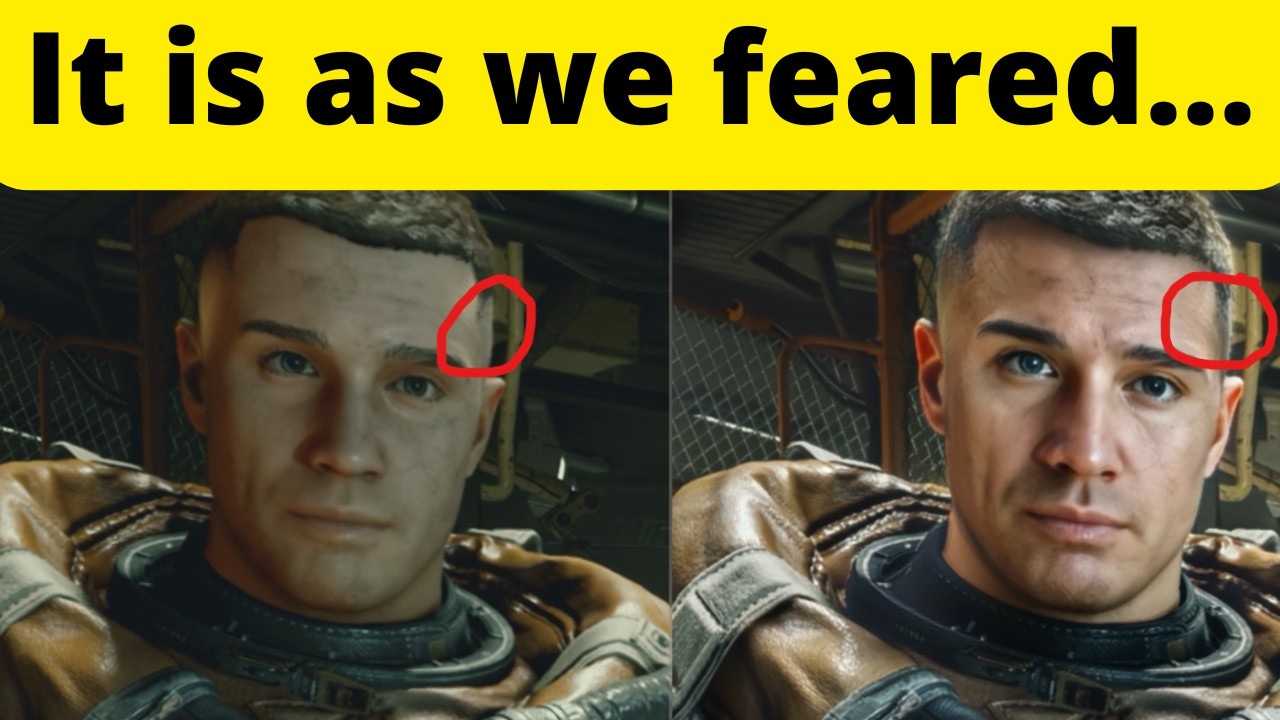
Saw a link to Resetera on Bluskie about this video/interview with Nvidia by Danial Owen.
Basically Nvidia lied as expected, the AI is changing the models(with a filter on top) and it doesn’t know what to do with the lighting or materials really.
3 Likes
Oliver was a while back also weirdly neutral about AI game generation from Google whatever that was called
Everyone knew what it was, but they lied, and then, finally admitted it’s just a GenAI filter.
These companies trying to gaslight us is really annoying.
2 Likes
It’s not really about us, it’s about throwing more gas on the fire that is AI.
Nvidia doesn’t care about gaming, they want companies like OpenAI and Microsoft to keep buying there products to use in data centers. Monopolizing gaming is just a way for them to keep up appearances.
DLSS 5 is for the first time making me question why upscalers exist in the first place. The major defense here from Nvidia is that developers control how it’s implemented, but I’m confused. If the developers are implementing it then isn’t it just doing the work of lighting for them? I’m not on PC, but in my head an upscaler is there for the end user to improve graphics to something beyond what was intended by the developers. Like it’s for someone who spent a LOT of money building a powerful PC to actually get something out of that rig even if a game isn’t strong enough to take advantage of the tech. But developers are supposed to implement it from the start? So like, why can’t devs just do the lighting themselves and have different settings available based on the end user’s PC?
From my understanding upscalers are not just about getting a better image than native, they help older cards have a longer life by allowing people to play games at a good quality without needing to push their cards as hard. It works on consoles too, which allow devs to ship a game at a lower res and get better performance, but unfortunately consoles are generally stuck with AMD FSR 2.0(except 5pro that got some like 3.5 but not quite 4 with pssr).
There’s also a difference, between DLSS5 and DLSS 4.5, DLSS5 is using genAI to generate an image/filter to look like what Nvidia trained that AI to think people look like, while not having a clue on what lighting should be. While 4.5 only generates the same image as what the devs provided with some better quality than what your resolution would suggest.
So, I think 720p in medium settings upscaled to 1080p, running at 60fps with the DLSS 4.5 generating an image closer to 1080p on high. But I’m not sure on that because if I could skip using upscalers on consoles I would.
1 Like
There’s multiple tech at play in many of the graphics card technologies now.
Frame generation creates additional frames in between others to improve the frame rate and make it less choppy, by either repeating one or aggregating between the last frame and the next one - I’ve personally not found it to be great as I get tearing so need V Sync which often doesn’t work with it.
Upscaling can be multiple approaches combined - the primary one is analysing lower res images and adding pixels that are aggregates of the ones around it to create higher resolutions, while the player focus and motion vector can help prioritise certain areas of the screen - for example the edges of the screen or a bit you’re moving away from can have more upscaling applied than the centre of the image where it may be higher resolution.
There’s also upscaling around ray tracing plus a few other bits.
Upscaling isn’t new though - the Xbox One X had it as did the PS4 Pro (which had that checkerboard rubbish), and it’s in many game engines and in Xbox backwards compatibility - it’s not just Nvidia and AMD.
In general it works very well and allows for greater frame rates and graphical improvements than hardware alone would allow, as that’s begun to plateau.
So to suddenly question all upscaling and want it always off is a big overreaction to one update (DLSS5) that isn’t even going to be available on consoles - if it was turned off permanently on the Series X across all engines etc you’d have to get used to either sub-30fps games again or ones that were incredibly blurry and muddy…
1 Like
For me it’s that I never even thought about upscalers before. How they worked or what their purpose was. It was just “Here’s a neat thing. I guess I’ll use it if I can.” It’s not DLSS 5 but more specifically the way Nvidia has responded to backlash. The idea that it’s not AI slop and is totally fine because developers have to implement it bust made me realize I don’t even really understand what upscalers are on the whole. Like what is their purpose and how do they work? And reading your and @Kals_Els responses, yeah I really don’t know. Upscalers to me were more in the background and kinda just happened. I only really thought of them in terms of like Xbox backwards compatibility and making older generation games look better and run smoother on modern hardware.
1 Like
All upscaling runs purely locally, not on a data centre at all - the frame gen and upscalers use aggregates between pixels plus some guessing using machine learning (often specific to the game, hence why you get updates from AMD and particularly Nvidia for DLSS that has the parameters and data to help) so while it could be a type of AI, unlike DLSS5 they’re not really anything like what it’s now thought as being, more just machine learning / trend analysis.
Most of all, it’s allowed us to play games at higher resolutions and frame rates than just the pure horsepower of our GPUs could do - given the diminishing returns of more power and the sheer cost of components, it’s almost necessary and also means we can run GPUs less at max power and not constantly upgrade to even more powerful ones, actually helping the environment unlike AI data centres
1 Like